Tyrants Without The Right to Command
Thoughts about the Becoming-Reactive of our civilization

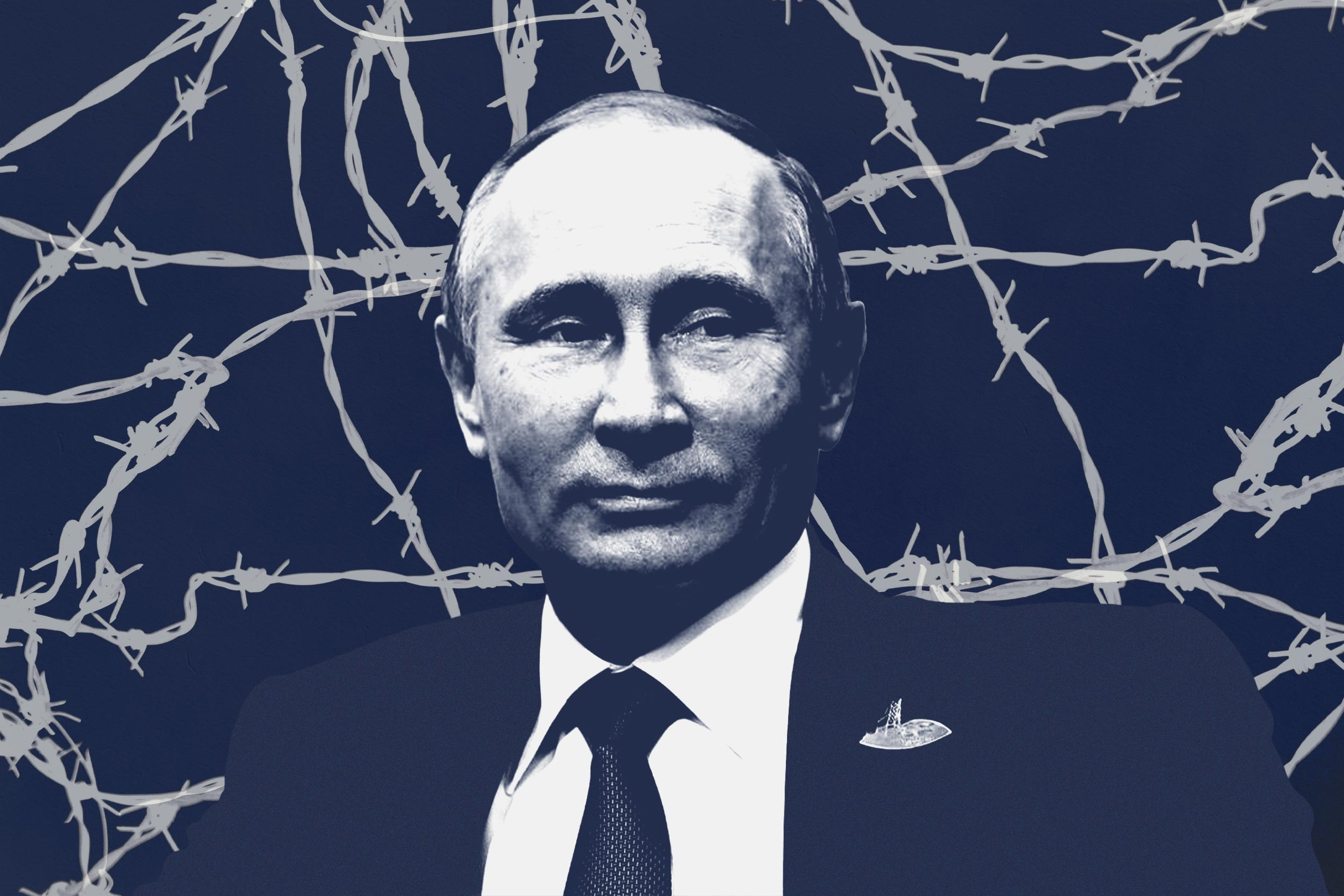
Gilles Deleuze published Nietzsche and Philosophy in 1962, at a time when French thought was dominated by the Hegelian dialectic—a logic of contradiction, labor, the movement of the negative and the “struggle of the slave”. Deleuze sought to recover a Nietzschean philosophy of difference and affirmation. He introduced a typology of forces that bypassed the need for “negation” as a creative motor. For Deleuze, the tragedy of Western thought was its tendency to mistake the reactive for the active, the slave’s resentment for the master’s power.
Today, this technical distinction offers the most precise lens through which to view our global instability. A specific type of exhaustion defines our current geopolitical moment. It is the exhaustion of “being found out.” Whether we look to the dismantling of the Western rules-based order by the MAGA movement or the Neoeurasianist revanchism of Vladimir Putin’s Russia, we are witnessing terminal stages of what Deleuze identifies as the “becoming-reactive” of our civilization. The stakes are not merely territorial, though for nations like Latvia, Canada, or Ukraine, the stakes are existential. The deeper crisis is ontological: a global eruption of intensified reactive forces that, having been “found out” as hollow, have turned toward a pure, desperate negation of life.
To understand the concept of “being found out,” we must first grasp Deleuze’s technical definition of force. For Deleuze, a body is not an object but a “relation of forces.” He writes: “In a body the superior or dominant forces are known as active and the inferior or dominated forces are known as reactive” (p. 40). We must be careful here not to equate “active” with “stronger” in a crude physical sense. Activity is the quality of a force that “goes to the limit of what it can do” (p. 58). It is the force of command, of transformation, and of the imposition of new forms. Reactive forces, conversely, are forces of adaptation, regulation, and conservation. They are the forces of “utility.” In a healthy organism—or a healthy polity—reactive forces obey, acting as the mechanical substrate that allows active forces to manifest.
Consider the “rules-based international order” not as a static set of laws, but as a body of forces. In its active state, this order was characterized by the “plastic force” of invention—the creation of new diplomatic avenues, the expansion of a renewed and novel concept of human rights, and the affirmative project of global integration. The reactive forces within this body (bureaucratic regulation, economic self-interest, state security) functioned as necessary mechanisms of stabilization. However, Deleuze warns of a “becoming-reactive” where the relation is inverted. This happens when reactive forces separate active force from what it can do. In the geopolitical arena, we see this when “sovereignty” is no longer an active power of self-determination but is used reactively to block international cooperation or to justify internal repression. When a superpower uses its “active” military might solely to conserve a status quo or react to perceived slights, it has already begun its descent into reactivity. It has been “found out” as no longer possessing the affirmative spark that once gave it the right to command.
The “found out” hegemon or the “found out” autocrat is an entity that has, just like the impotent rage of the Fragile Inquisitor, lost the capacity for activity. When a political movement like Trumpism seeks to destroy the very rules-based order that once secured its influence, it is because that movement has been found out. It no longer possesses the affirmative “plastic force” (p. 42) required to create new values or sustain a coherent vision of the future. Instead, it enters the state of ressentiment.
To understand this state, we must look to what Deleuze calls Nietzschean “mnemotechnics”—the technology of memory. Deleuze distinguishes between a healthy, active faculty of forgetting and the reactive hypertrophy of memory. He writes: “Forgetfulness is an active faculty of suppression... it is the strength of the plastic, regenerative and curative force” (p. 113). Activity requires the ability to digest and “forget” experiences so that the “cerebral surface” remains fresh for new impressions. The man of ressentiment, however, lacks this digestive power. He is characterized by a “prodigious memory” of traces. In this reactive state, “the excitation is not suppressed” but instead “plunges into the organism” to leave a permanent mark—a trace (p. 114). He cannot forget, and will not forgive.
This trace is the point of appearance in consciousness of the “found out” pathology. The authoritarian cannot discharge a reaction; he feels every wrong as if it happened yesterday. He has formed a “reactive skin” that vibrates with every past perceived humiliation. Because he cannot forget, he cannot act; he can only react to the memory of the trace. The man of ressentiment blames the world for his own inability to act. When the authoritarian claims that the “system is rigged” or that “the West has failed,” he is externalizing the pain of being found out. He is saying: “You are evil, therefore I am good” (p. 119). His entire identity is a reaction to a trace of the past—a lost greatness or a historical betrayal—which he is physiologically incapable of surrendering.
This logic is at the heart of the threat to Eastern Europe. Putin’s Neoeurasianism is a textbook case of reactive force masquerading as activity. It is a philosophy of “bad conscience.” Deleuze notes that “bad conscience is the interiorisation of reactive force” (p. 129). When active force is prevented from discharging itself outwardly—when Russia’s internal vitality failed to produce a thriving society—that force turned inward. It became a “workshop of pain.” The invasion of Ukraine and the looming shadow over the Baltic states are not signs of a “strong” Russia; they are the desperate attempts of a “found out” empire to manufacture a witness to its own suffering. The reactive force, unable to create, can only “depreciate life” (p. 147). It seeks to make the rest of the world as miserable and reactive as it is.
The concept of “being found out” is the moment of exposure where the reactive force realizes it has no affirmative content. Deleuze explains that reactive forces “proceed by decomposition” (p. 58). They break down the higher active functions into smaller, manageable, mechanical parts. In the geopolitical sphere, this looks like the erosion of international law into mere transactionalism. The “rules-based order” was an attempt—however flawed—at an active expression of global cooperation. The authoritarian turn is the “becoming-reactive” of this order. The authoritarian has been found out as someone who cannot play by the rules, not because the rules are “rigged,” but because he lacks the “active power of affirmation” (p. 54) required to thrive within them.
Being found out leads directly to what Deleuze calls the “Ascetic Ideal.” This is the point where “life is judged, condemned and depreciated” (p. 142) in the name of values that are supposedly “superior” to life—tradition, the blood-and-soil of Eurasia, or a lost mythical greatness. These are “nihilistic” values. Deleuze is precise: “Nihilism means: the values of life are depreciated, life is reduced to its reactive forms” (p. 148). For a country like Latvia, the danger is that it is being dragged into this nihilistic vortex. The Neoeurasianist project does not want to “include” Latvia in a thriving new world; it wants to prove that Latvia’s active, democratic aspirations are “fictions” that must be destroyed to satisfy the bad conscience of the found-out hegemon.
How do we respond to the pathos of the found out? Deleuze suggests that the only way forward is through a “double selection.” This is not a simple choice between options, but a cosmic filtration system that Nietzsche calls the Eternal Return. The first selection is the thought itself: if the world were to return eternally, could you will this moment and every moment again and again, joyfully? The “found out” cannot pass this test; their power is predicated on the once, the grievance, the trace of a past that they need to avenge but never repeat.
But the second selection is more radical. It is the selection of the “will to power” itself. Deleuze explains that the Eternal Return makes “will into a creation” (p. 175). It selects against anything that is merely reactive. We cannot simply try to restore the old reactive order or the decaying institutions that allowed the “found out” to thrive in the first place. Instead, we must engage in “active destruction” (p. 174). This means negating the reactive forces themselves by forcing them to their own limit where they can no longer function as parasites. It is the “man who wants to perish” in order to make way for the Overman. To overcome the authoritarian turn, we must be willing to let the “found out” versions of our institutions die—not in the way the authoritarians want, as a descent into chaos, but through a rigorous selection of what is capable of affirming itself eternally. We must destroy the reactivity within them.
“Transmutation” is the final Deleuzian concept we must master. It is the point where “negation changes its quality” and becomes a mode of affirmation (p. 175). We are currently in the “becoming-reactive” of history, but the goal is the “becoming-active.” This requires a shift from the “found out” state of panic and resentment to a state of Dionysian affirmation. We must ask: What can we do that does not depend on the negation of an enemy? What active forces can we unleash that do not require the “other” to be a witness to our pain? The threat to Europe is not just a military one; it is the threat of being infected by the reactivity of the found-out. The only true defense for a nation like Latvia, or for the Western project as a whole, is to reclaim the “active power of forgetting,” (p. 113) moving to eliminate from consciousness the slights of the past and the fictions of the reactive, moving instead toward a radical affirmation of what life can become.
The “found out” are dangerous because they have nothing left but the power to say “no.” Our task is to ensure that their “no” is the final gasp of a dying reactivity, rather than the tombstone of our active future. We must recognize that the destruction of the Western order is a symptom of a deeper inability to affirm life, and we must respond not with a defensive reactivity of our own, but with a “sovereign” activity that creates new values in the very heart of the crisis.